One property record that survives the whole asset lifecycle
We build listing, transaction, and operations software on a durable property model, so the same facts stop being re-entered at every stage by a different team.
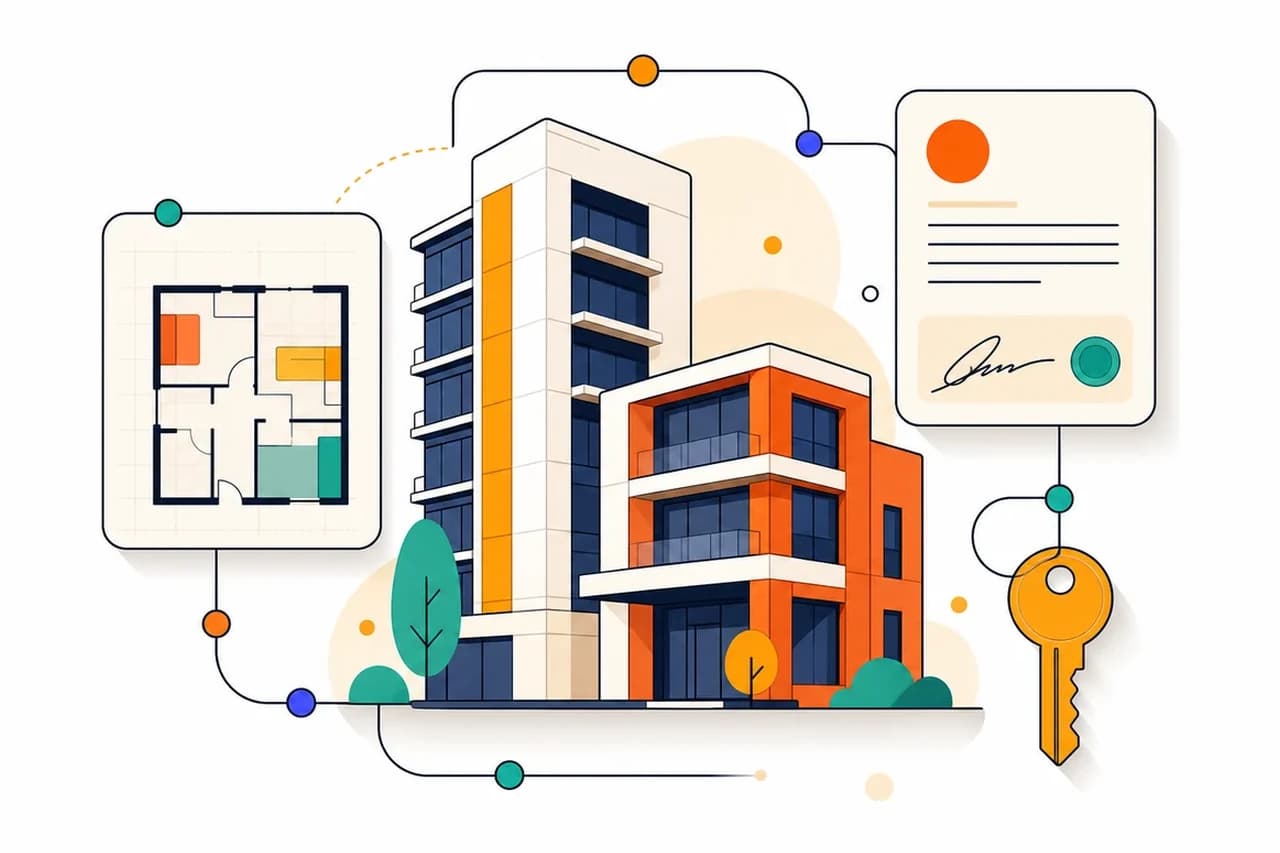
One model
asset, unit, and party across every stage
Document-native
extraction and approvals inside the flow
Lifecycle-wide
from listing through operations and reporting
A building outlives every system that describes it
Property data is scattered across listings, documents, vendors, portfolios, and local rules that change by jurisdiction. A building is marketed by one system, transacted in another, and operated in a third, none of which agree on the unit count. We build a durable property and unit model with a workflow layer above it, so a fact captured at listing is still trustworthy years into operation.
Where it shows up
The same fact lives in five places
Square footage, unit counts, and ownership are re-keyed at every handoff. Each copy drifts, and reconciling them becomes somebody's permanent job.
The truth is inside documents
Leases, titles, and inspection reports hold the terms the business runs on, but they arrive as PDFs and scans that no downstream system can query.
Rules change by jurisdiction
Disclosure, tenancy, and tax rules differ by market. Hard-coding them produces a codebase that cannot expand into the next city.
Software for the whole life of an asset
Listing, transacting, and operating a property are usually three products. We build them as one record with six working surfaces on top of it.
Listing, search, and marketplaces
Fast geospatial search, saved-search alerts, and media-heavy listing experiences that stay quick on mobile networks.
- Geospatial search
- Alerts
- Media pipeline
Document and lease automation
Extraction, clause identification, and approval routing that turns leases and contracts into structured, queryable terms.
- Extraction
- Clause review
- E-signature
Transaction and deal workflow
Offer, diligence, and closing pipelines with tasks, conditions, and audit history visible to every party involved.
- Pipelines
- Conditions
- Audit history
Property operations and maintenance
Work orders, vendor portals, inspections, and resident communication tied back to the unit they belong to.
- Work orders
- Vendors
- Inspections
Portfolio and market analytics
Occupancy, yield, energy, and market comparison built on current operational data rather than a quarterly spreadsheet.
- Occupancy
- Yield
- Benchmarking
Valuation and decision support
Comparable analysis and scenario modelling with the assumptions exposed so a human can challenge the output.
- Comparables
- Scenarios
- Assumptions
What we build property platforms with
Picked for map and media weight on the front end, a property model that holds its shape underneath, and document work that can be checked by a person.
Product surface
- Next.js
- React
- TypeScript
- Mapbox GL
- Cloudinary
Domain services
- Node.js
- Python
- PostgreSQL
- PostGIS
- Elasticsearch
Documents and intelligence
- Textract
- LangChain
- pgvector
- OpenAI
- DocuSign
Platform
- AWS
- Terraform
- Kubernetes
- Redis
- Grafana
From property model to a second market
Four stages, run in order, because each one depends on the record the previous stage made trustworthy.
Define the property model
Asset, building, unit, party, and agreement are modelled once, with jurisdiction handled as data rather than branching code.
Bring documents into the system
We extract the terms that matter into structured fields, keeping the source document linked for evidence and review.
Connect the lifecycle stages
Listing, transaction, and operations are joined so a fact captured once stops being re-entered downstream.
Expand market by market
New jurisdictions arrive as configuration and rule sets, tested against the markets already live.
What owners and operators notice first
- One property record across the full lifecycle
- Lease and contract terms queryable, not buried in PDFs
- Fewer document and approval bottlenecks
- Portfolio decisions grounded in current data
Standards we build against
- RESO Data Dictionary
- SOC 2
- GDPR
- eIDAS
- WCAG 2.2 AA
Systems we integrate
- Yardi
- MRI Software
- AppFolio
- DocuSign
- Mapbox
- MLS / RESO
- Xero
- Salesforce
What property teams ask us first
Systems of record handle accounting and compliance well and workflow poorly. The value of custom software is usually in the experience layer and the connective workflow between stages, with the record system kept as the ledger it is good at being.
Give the asset one record it can keep
Tell us where property data is being re-keyed or buried in documents. We will come back with a model, a workflow layer, and a first slice worth shipping.