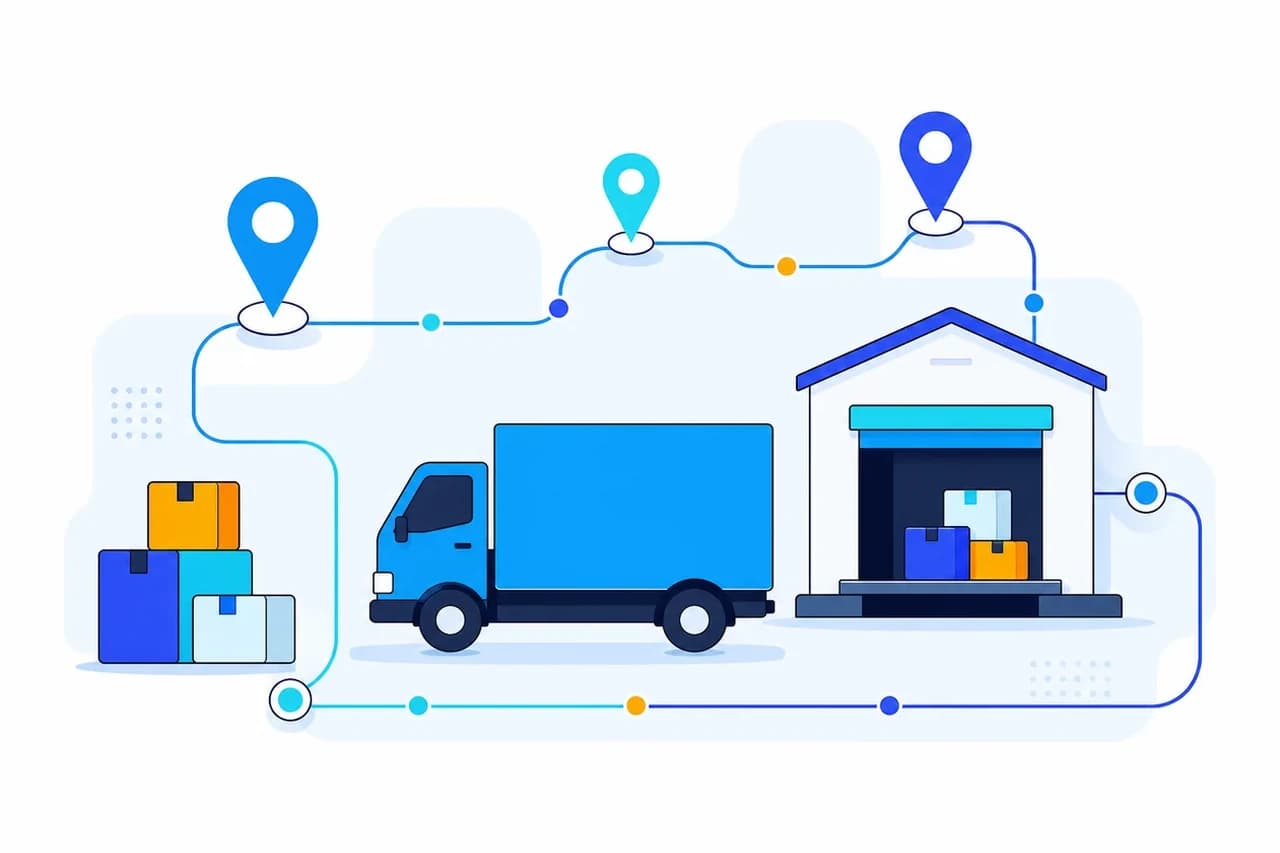
One live view of a network that never stops changing
We build event-driven logistics systems where exceptions surface before service is missed, and every automated decision arrives with the reason behind it.
Event-first
state derived from what actually happened
Exception-led
attention routed to what needs a human
Explainable
every recommendation carries its reason
Why the plan is always a step behind the network
A plan is stale the moment a vehicle, dock, supplier, or customer changes state. Most logistics software still models the plan and treats reality as an exception, which is why operators end up running the network from a phone and a spreadsheet. We build around events, make exceptions first-class, and give planners automation that recommends action while showing its reasoning.
Every partner has its own format
Carriers, brokers, and customers exchange data over EDI, APIs, portals, and email. Normalising that traffic is most of the work and it never fully stops.
Plans decay in minutes
Traffic, dock congestion, and a late supplier all invalidate the same schedule. Systems that re-plan nightly leave operators managing the gap by hand.
Coordination happens off-system
The real status often lives in a phone call. If the software cannot capture that, its data stays a lagging approximation of the network.
The layer above your TMS and WMS
Six areas that decide whether the network is visible or merely recorded. We take ownership of any of them end to end.
6 capability areas
Dispatch, routing, and capacity
Planning and re-planning against live constraints, with driver hours, vehicle profiles, and service windows treated as hard inputs.
- Route optimisation
- Capacity
- Re-planning
Warehouse, yard, and fulfilment
Receiving, putaway, picking, and dock scheduling workflows built for scanners and gloves rather than a desktop browser.
- WMS workflows
- Dock scheduling
- Scanning
Visibility and exception management
Milestone tracking with predicted arrival, deviation detection, and an exception queue prioritised by service impact.
- Milestones
- Predicted ETA
- Exception queue
Carrier and partner integration
EDI and API connectivity with a normalisation layer, so onboarding a new carrier is configuration rather than a project.
- EDI 214 / 856
- Carrier APIs
- Normalisation
Network analytics and cost to serve
Lane performance, dwell, and true cost per shipment computed from operational events instead of monthly invoices.
- Lane analytics
- Dwell
- Cost to serve
Driver and floor applications
Offline-capable mobile apps for drivers and warehouse staff that keep working when the signal does not.
- Offline-first
- Proof of delivery
- Sync
From the event map to a lane-by-lane rollout
We model the network as the signals it already emits, decide what deserves a human, and prove it on one lane before it reaches the rest.
Step 1: Map the event stream
We catalogue every signal the network already emits, including the ones currently arriving as email and phone calls.
Step 2: Build the exception model
We define what counts as a deviation, what it costs, and who should see it, before designing any operator screen.
Step 3: Automate with reasons attached
Recommendations ship with their inputs visible, so planners can build trust and correct the model where it is wrong.
Step 4: Roll out lane by lane
We prove the system on a contained part of the network, then widen once the exception rate and service numbers hold.
What we build logistics systems with
Chosen for streaming network state, dense operator screens that stay responsive, and field apps that keep working where the signal does not.
Operator surface
- React
- Next.js
- TypeScript
- MapLibre
- TanStack Table
Field applications
- React Native
- SQLite
- WatermelonDB
- Expo
Services and events
- Go
- Java
- Kafka
- PostGIS
- Temporal
Optimisation and platform
- OR-Tools
- Python
- AWS
- Kubernetes
- Terraform
What operators notice in the first month
On the floor
- Exceptions surfaced before service is missed
- Plans updated from live operational signals
- New carriers onboarded as configuration
- Less manual coordination across partners
What operations leaders ask us first
Rarely. Most of the value sits in the visibility, exception, and coordination layer above those systems. We integrate with what you run and build the parts that no vendor covers because they are specific to your network.
Get one live view of your network
Tell us which lane, dock, or partner costs you the most coordination today. We will come back with the event model, the exception queue, and a first slice worth running.